

-
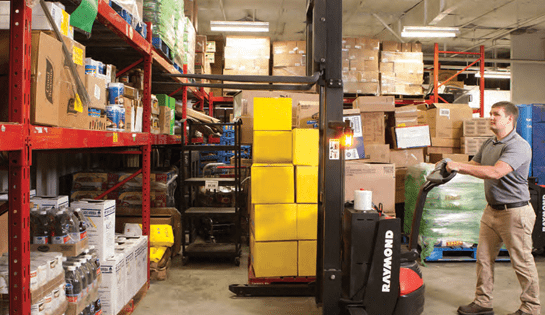
Walkie Stackers Built To Perform When you need to better utilize your vertical storage in tight aisles and congested work areas, Raymond Walkie Stackers provide a practical solution. These compact forklifts help operators stack pallets, load and unload trailers, and position loads at an ergonomic height for stock replenishment, production support, and warehouse storage. Durable components, fewer maintenance points, and dependable performance contribute to less down time for service, making these trucks well suited for retail back rooms, light manufacturing, warehouses, and dock to stock applications.
Find The Right Walkie Stacker For You
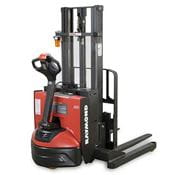
6210 Walkie Straddle Stacker
- Capacity: 2,000 lbs. and 2,500 lbs.
- Elevated Height: 143" maximum
- Battery: 24 volt
Learn More

6310 Walkie Straddle Stacker
- Capacity: 2,200 lbs., 3,000 lbs., and 4,000 lbs.
- Elevated Height: 189" maximum
- Battery: 24 volt
Learn More

6410 Walkie Reach Stacker
- Capacity: 3,000 lbs.
- Elevated Height: 189" maximum
- Battery: 24 volt
Learn More

6510 Walkie Counterbalanced Stacker
- Capacity: 2,000 lbs., 3,000 lbs., and 4,000 lbs.
- Elevated Height: 189" maximum
- Battery: 24 volt
Learn More
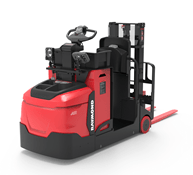
8530 Rider Stacker
- Capacity: 2,500 lbs.
- Elevated Height: 72"
- Battery: 24 volt
Learn More
Accomplish All Of Your Warehousing Tasks
The Raymond Walkie Stackers help improve productivity across many warehouse tasks, from receiving and put-away to inventory replenishment and light manufacturing. Similar to our powered pallet jacks, these trucks are designed for smooth operation in confined spaces while giving operators greater control when stacking and retrieving loads. Modular components, durable construction, and simplified maintenance help keep equipment operating reliably throughout demanding warehouse environments.
-
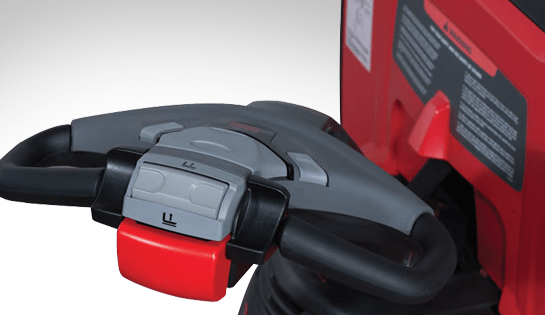
Move More Pallets Per Hour
Easy to use controls and ergonomic control handle increase operator confidence -
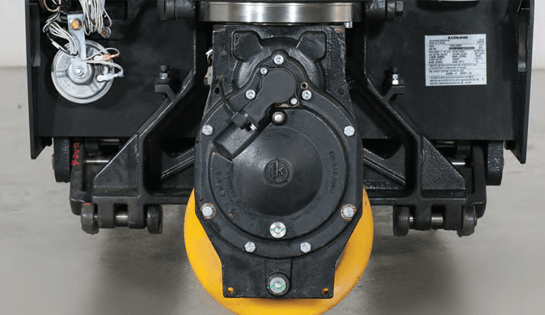
A Smoother Ride With Efficient Operation
Transistorized controls and large load wheels help operators easily navigate dock plates -
Easy To Maintain And Economical To Own
Heavy duty construction and on-board diagnostics make these walkie stackers stronger and more resilient
Interested in a Raymond Walkie Stacker? Let's Talk!
A representative will use the information you provide below to develop the best solutions for your operation.
Learn more about walkie stacker applications, lift heights, capacities, compact operation, and how they compare to other lift trucks.
A walk-behind stacker is a pedestrian-operated lift truck used for raising, moving, and stacking palletized loads where a full-size forklift is not practical. Common applications include pallet stacking, trailer loading, stock replenishment at an ergonomic height, and moving materials through congested spaces. Raymond walkie stackers are well suited for retail back rooms, light-duty manufacturing, and dock-to-stock operations.
A walkie stacker is pedestrian-operated, meaning the operator walks behind or alongside the truck instead of riding in a cab. This makes it more compact, easier to operate, and better suited for tight spaces and lower-volume applications.
Walkie stackers generally have lower capacities and lift heights than full-size forklifts, but they also have fewer maintenance points and a significantly lower total cost of ownership.
The Raymond 6210 Walkie Straddle Stacker reaches lift heights of up to 143 inches. The 6310, 6410, and 6510 models each reach up to 189 inches. The 8530 Rider Stacker is designed for lower-level applications and reaches up to 72 inches.
The Raymond 6210 handles loads from 2,000 to 2,500 pounds. The 6310 supports capacities from 2,200 to 4,000 pounds, the 6410 handles 3,000 pounds, and the 6510 is available in 2,000-, 3,000-, or 4,000-pound configurations. The 8530 Rider Stacker handles up to 2,500 pounds. All models operate on 24-volt battery systems.
Yes. Retail and light manufacturing are among the most common walkie stacker applications. Their compact footprint allows them to move through congested aisles and storage rooms that full-size forklifts cannot easily access. On-board diagnostics and fewer maintenance points help limit downtime, making them a cost-effective solution for moderate daily material handling needs.
A straddle stacker uses baselegs, also called outrigger legs, that straddle the pallet for stability. This design allows the truck to remain lighter and more compact.
The Raymond 6510 counterbalanced stacker uses a rear counterweight instead of outriggers. This allows it to handle pallets that do not fit between straddle legs, making it more flexible for non-standard pallets and tighter floor layouts.
A walkie stacker is a strong choice when an operation needs to stack pallets at height but does not have the volume or budget to justify a reach truck. Compared with a pallet jack, it adds the ability to raise loads for racking, replenishment, and trailer work.
Reach trucks are better suited for high-frequency, high-bay racking in structured warehouse environments. Walkie stackers fill the gap for smaller operations that need a simple, compact, and lower-maintenance electric stacker for daily material handling tasks.
Frequently Asked Questions About Walkie Stackers
What is a walk-behind stacker used for?
What is the difference between a walkie stacker and a forklift?
What lift heights are available for electric walkie stackers?
What weight capacities do walk-behind pallet stackers support?
Are walkie stackers suitable for retail and light manufacturing environments?
What is the difference between a straddle stacker and a counterbalanced stacker?
When should a business choose a walkie stacker instead of a reach truck or pallet jack?