

Flexible Financing To Meet Your Needs
In today's dynamic material handling landscape, flexibility is crucial, especially when it comes to sourcing and leasing forklifts and intralogistics solutions for your operation. Although financing isn't a new concept, it continues to gain popularity when operations must quickly accommodate an ever-changing economic environment. We have a variety of adaptable and affordable leasing programs which offer a low cost of ownership and competitive interest rates, so you can grow your business at fixed costs.
Advantages Of Leasing Your Equipment
-

A Wide Range Of Program Options
With a wide range of program options, such as seasonal payments and step-up/step-down or single-payment leases, you can tailor cash flows to your income streams. An operating lease can further reduce your monthly payment for the same piece of equipment and allow you to upgrade equipment at the end of your term. If the forklifts still have viable life at the conclusion of your lease, you can choose to purchase the vehicles or extend the lease, further lowering the payment. -
Flexibility In Changing Out Equipment
Many companies often experience challenges as a result of not having an effective method for replacing their fleet over time. We can work with you to swap out equipment to better suite your operation if your business needs change. With a five-year lease, you can easily “flip the fleet” every 60 months to capitalize on the benefits of a newer forklift fleet while keeping your expenses fixed and manageable. -

Consolidate Payments Into One Invoice
Corporations typically receive a handful of invoices for numerous costs besides the forklift itself, including the battery, charger, attachments, maintenance, a fleet management system, and more. We can combine an array of different invoices into one lease bucket to help you simplify your finances and accounting process. The option to consolidate these fees into one payment will significantly streamline the amount of time and paperwork associated with managing your leased fleet. -
Easy Returns With No Additional Cost
A common perception of leasing is that the end-of-lease process often turns into a pain point for the lessee. While this might be the case with banks and third-party leasing corporations, we have our own leasing and service programs and see this phase as an opportunity to ensure customer satisfaction. We can also perform preventive maintenance and repairs to coordinate service with the lease agreement, keeping your trucks in good condition and reducing the chance of additional costs at the end of the lease term.
Interested In Learning More? Let's Talk!
Please complete the form below and a representative will contact you shortly to discuss your request.
-
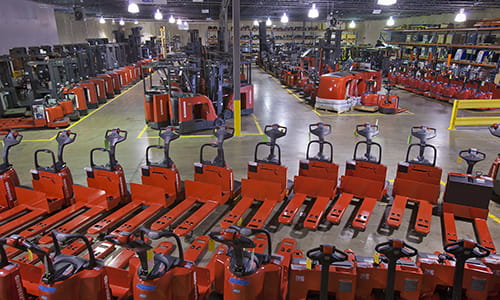
Maximize Your Cash Flow We recognize that most operations experience different challenges to keep their operations moving. In addition to our single-source leasing programs, we have supplemental financing options to help you maximize your cash flow. Our equipment rentals and pre-owned forklifts can help you react quickly with a wide range of models, in-stock and ready to be delivered when you need them. For operations in southeast Texas, we also offer short-term and long-term forklift rentals in Houston with the same in-stock fleet and fast delivery.
Learn more about forklift leasing options, payment structures, end-of-lease choices, fleet replacement cycles, and managing equipment costs.
Malin offers a range of forklift leasing programs designed to fit different operational and financial needs. Options include seasonal payment structures, step-up and step-down leases, single-payment leases, and operating leases. At the end of the lease term, businesses may upgrade to newer equipment, purchase the forklifts, or extend the agreement if the trucks still have useful service life remaining.
The right choice depends on your financial priorities, expected equipment life, and how frequently your operational needs change. Leasing preserves capital, provides fixed payments, and makes it easier to upgrade equipment regularly.
Purchasing may be a better fit when equipment will be used long term with limited changes and ownership is the preferred accounting approach. Leasing often provides greater flexibility for operations that want to avoid holding aging equipment.
Yes. Malin offers seasonal payment options that align lease payments with a business's income cycle. Payments can be higher during peak revenue periods and lower during slower months, making forklift leasing more practical for industries with seasonal demand.
At the end of the lease, businesses may upgrade to a newer fleet, purchase the equipment if it still has useful service life, or extend the lease at a lower payment. Malin manages the end-of-lease process directly, helping keep the transition focused on operational needs and future equipment planning.
Yes. Forklifts, batteries, chargers, attachments, maintenance programs, and fleet management systems may be consolidated into a single monthly lease payment. This can simplify accounting, reduce separate invoices, and make the total cost of operating a leased fleet easier to manage.
A common approach is to replace or “flip” the fleet every 60 months on a five-year lease cycle. This helps keep equipment current and maintenance costs predictable. The right replacement interval depends on shift intensity, operating conditions, maintenance history, and how quickly the operation's equipment requirements change.
Yes. Leasing reduces the large upfront capital expense required to purchase equipment outright, preserving working capital for other business priorities. Fixed monthly payments also make budgeting more predictable and allow operations to expand or update a lift truck fleet without tying up as much capital in equipment.
Frequently Asked Questions About Forklift Leasing
What forklift leasing options are available?
Is it better to lease or buy a forklift?
Can lease payments be structured around seasonal cash flow?
What happens at the end of a forklift lease term?
Can maintenance, batteries, and attachments be included in a lease agreement?
How often should a forklift fleet be replaced?
Can leasing help reduce upfront capital expenses?