

-
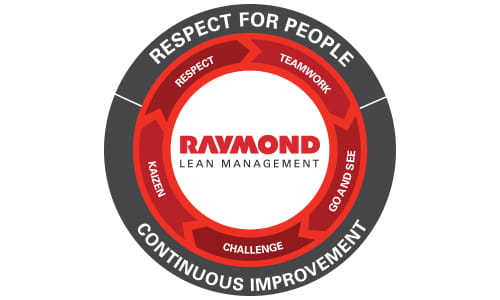
Adopt A Lean Management Approach In today's dynamic business climate, operations leaders and supply chain professionals are looking for advantages with every decision they make. Lean management is a long-term operational discipline that seeks to improve quality, reduce waste, and optimize opportunities, turning small enhancements into big impacts. When applied correctly, a lean system can produce effective and efficient processes that satisfy customer demands and provide the best solutions for continuous improvement. Lean management principles have played a pivotal role in our commitment to addressing customer challenges.
Better Thinking. Better Process. Better Business.
Optimization efforts begin with some level of reflection, planning, and, most importantly, understanding what problem you are trying to solve.
- Do you have clearly defined and well documented processes?
- Are your processes consistent, repeatable, and error-free?
- Do you know the KPIs needed to gauge the effectiveness of functional areas within your business?
- Do you have a strategy for collecting, interpreting, and acting on the data your business collects?
Raymond Lean Management, built on the proven foundation and principles of the world-renowned Toyota Production System (TPS), is a holistic approach to problem-solving that allows you to standardize processes, track key performance indicators, and make continuous improvements.
Maximize Operational Efficiency and Productivity
Our goal is not only to help you solve problems, but to teach you how to solve them yourself. Through a process of visualization, organization, and standardization, we can show you how to identify inefficiencies and implement changes to improve your workflows and develop your employees.
-

Gather And Analyze Data
By gathering data, a lean system can help provide visibility into the current state of an operation. Managers should regularly evaluate the data collected from their operation and adapt accordingly. -

Visualize Improvement Opportunities
Visualization makes a situation easily understood simply by looking at it and can be accomplished with data and tool displays or label and location markings. With visualization, an operation can quickly share information, communicate standards, and identify defects. -

Empower Your Employees
Lean management teaches your workers to spot inefficiencies, errors or potential defects by providing them with practical tools to share ideas and develop solutions. By giving employees the opportunity to implement change, they become more engaged which often leads to higher morale and workforce retention. -

Establish Standardized Work Processes
Standardized work creates clearly defined employee expectations and ensures consistency of both labor and materials. By establishing standardized work processes, companies can help eliminate or reduce non-value-added steps, resulting in higher operational effectiveness.
Raymond Lean Management Success Stories
Whether it's through faster fulfillment, reduced waste, minimized downtime, or improved quality, our team can provide education and consulting on this industry-leading, one-of-a-kind lean management system to ensure you get the most out of your resources, like we did with these customers.
-

Hesselbein Tire Co., Inc.
Hesselbein Tire Co., Inc., a leading tire wholesaler in North America, was experiencing high turnover at several of its facilities, leading to inefficient operations, fulfillment errors, and difficulty meeting increased demand. -

Crossroads Community Services
Crossroads Community Services focuses its efforts on feeding those affected by economic and social hardships in North Dallas. In 2019, the food bank expanded its distribution center and wanted to streamline operations to make the most of their volunteers’ time.
What Problem Can We Help You Solve?
Please complete the form below and a representative will contact you shortly to discuss your request.
-

Optimization Before Automation With the collective goal of reducing waste throughout an organization, lean management transforms a company’s culture to focus on improved quality by constantly seeking optimization opportunities. An optimized material handling operation creates more space for product, increases workforce productivity, and leverages intralogistics solutions for the best suitable task. Ultimately, this process results in cost savings that can be reinvested throughout your business, often partially, or even fully, funding the next improvement.
Learn more about lean warehouse management, the Toyota Production System, KPIs, continuous improvement, and preparing operations for automation.
Lean management in warehousing is an operational discipline focused on improving process flow, eliminating waste, standardizing procedures, and getting more value from existing resources. Raymond Lean Management, built on the Toyota Production System, provides a structured framework for applying these principles to warehouse and distribution environments of any size.
By mapping and streamlining an item's journey from receiving through final dispatch, this approach helps eliminate bottlenecks, reduce delays, and minimize unnecessary handling. The goal is to create a smoother, more efficient fulfillment operation that improves productivity and customer value.
Lean management creates repeatable, measurable work processes and uses key performance indicators to show where performance breaks down. Employees are also encouraged to identify inefficiencies and contribute solutions. This can accelerate improvement cycles, reduce errors, and free up space and labor previously consumed by non-value-added activities.
The Toyota Production System is a management philosophy built around Just-in-Time and Jidoka, or built-in quality. It focuses on creating consistent flow, maximizing customer value, and systematically eliminating waste.
In lean warehousing, these principles are applied to material movement rather than manufacturing alone. Standardized work, visual management, and pull replenishment help reduce unnecessary handling, delays, damage, and errors from receiving through shipping. This can shorten cycle times, improve labor utilization, and support continuous improvement throughout the facility.
A warehouse lean management system depends on three foundational practices: standardization, operational organization, and visualization. Standardization establishes current best practices and reduces non-value-added steps. Operational organization structures the workspace to reduce disorder and create reliable data baselines. Visualization uses floor markings, signs, boards, and other cues to make standards and performance gaps easy to see. Together, these practices help frontline employees identify waste and support daily problem-solving.
Clearly defined KPIs allow improvement efforts to be based on evidence instead of perception. Raymond Lean Management emphasizes selecting the right metrics for each functional area, collecting data consistently, and reviewing performance regularly. This helps turn small, incremental gains into meaningful long-term improvements in productivity, fulfillment accuracy, and labor utilization.
Lean management improves how people and workflows function within an existing operation. Warehouse automation uses technology to replace or assist human tasks.
The key distinction is sequence. Optimizing processes before automating them helps ensure that automation supports an efficient workflow instead of making an inefficient process run faster at a greater cost.
Lean management is an ongoing discipline rather than a one-time project. Initial improvements in process consistency, error reduction, and space utilization may appear within the first few weeks.
A deeper cultural change, where teams identify and solve problems without outside prompting, typically develops over several months. Malin's lean warehouse consulting approach is designed to help operations build the skills needed to continue improving over time.
Frequently Asked Questions About Lean Management
What is lean management in warehouse operations?
How does lean management improve warehouse efficiency?
What is the Toyota Production System, and how does it apply to lean warehousing?
What are the core principles of a lean management system?
How do key performance indicators support continuous improvement in a warehouse?
What is the difference between lean management and warehouse automation?
How long does it take to implement a lean management system?