

As the complexity of logistics systems continues to increase, autonomous products offer a robust and flexible means of control. Among their many benefits, these solutions can help reduce the amount of hard-to-fill jobs, high turnover costs, and product damage from mishandling. After fully vetting your options through optimization, we can simplify your adoption and implementation of automated solutions with an assortment of professional teams and tailored technologies to help you get more out of your workspace, workflow, and workforce.
Operator Assist Technologies
With skilled operators in short supply and inexperienced employees often covering seasonal demands, lift truck operations in wire guided, very narrow aisle applications need to be as simple as possible to maximize productivity. This suite of integrated, intelligent solutions is designed to enhance operator awareness, proficiency, and security through comprehensive warehouse systems integration.
-
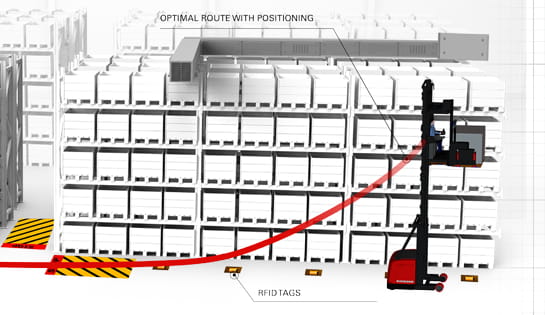
Zoning and Positioning
Forklift Zoning and Positioning options ensure more reliable, repeatable truck operation by controlling many order picking functions. Operators are able to focus on their surroundings and the task at hand instead of searching for locations, so they can learn more quickly, execute more accurately, and work more efficiently. -
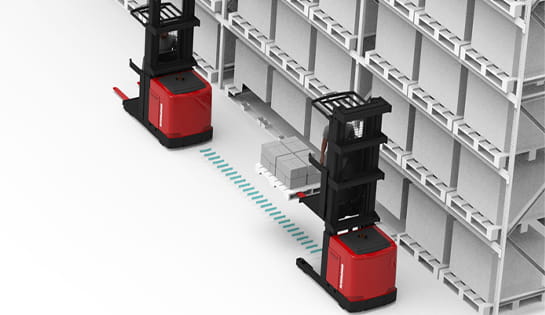
In-Aisle Detection System
IADS alerts operators when objects are detected in the truck's path and brings the truck to a controlled stop. This system assists in keeping trucks separated while on the wire in the aisle, enhancing operator security and confidence in very narrow aisle applications.
-
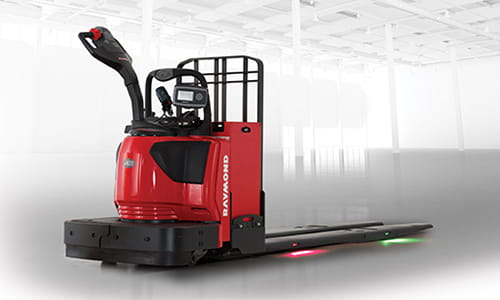
Operator Picking Solutions The only put-to-light system of its kind, the Pick2Pallet LED Light System features long-lasting LED lights embedded into the outside of each fork to help reduce errors in AB batch pick applications.
This feature visually indicates where operators should place each item, allowing you to take advantage of all the productivity benefits of batch picking while minimizing errors and increasing picking speeds.
-
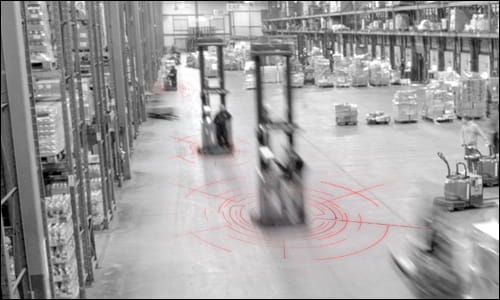
iWAREHOUSE Location System By giving you insights into areas of congestion and allowing you to geofence certain areas in your warehouse, this feature allows you to:
+ Improve throughput and productivity by developing more efficient routes through your facility
+ Reduce impacts by identifying problem areas and adjusting warehouse layouts
+ Enhance workplace security and equipment utilization by controlling vehicle speeds and access areas
Interested In Learning More? Let's Talk!
Please complete the form below and a representative will contact you shortly to discuss your request.
Learn more about warehouse automation, operator assist technology, robotics, systems integration, productivity improvements, and automation ROI.
Malin provides a range of warehouse automation solutions, including operator assist technologies, picking solutions, and location-based controls. These include Zoning and Positioning (ZaP), the In-Aisle Detection System (IADS), the Pick2Pallet LED put-to-light system, and the iWAREHOUSE® Location System for geofencing and fleet control. For larger automation projects, Malin also delivers ASRS, conveyor systems, industrial robotics, and fully engineered warehouse solutions.
Automation reduces the variability and effort involved in repetitive tasks, helping operations move faster, reduce errors, and maintain consistent performance across shifts. Technologies such as ZaP, Pick2Pallet, and IADS improve picking accuracy, automate positioning, and enhance operator performance.
Together, these solutions help warehouses increase throughput while reducing the impact of labor shortages and employee turnover.
Full warehouse automation replaces human tasks with technologies such as autonomous guided vehicles, ASRS, and robotic picking systems.
Operator assist technology keeps people involved while automating specific functions like truck positioning, hazard detection, and pick placement. For many operations, operator assist provides meaningful productivity improvements with a lower initial investment than full automation.
Yes. Automation helps reduce the number of experienced operators needed to maintain throughput while making it easier to onboard new employees. It also reduces product damage caused by operator error and helps maintain consistent performance during seasonal staffing increases.
Malin follows an "optimize before you automate" approach. The team first analyzes workflows using lean management principles to establish a performance baseline and identify inefficiencies. Once operations are optimized, automation opportunities become clearer and typically provide a stronger return on investment.
Yes. Malin designs automation solutions to integrate with existing warehouse management systems (WMS), ERP platforms, and labor management software. The iWAREHOUSE platform also connects fleet, labor, and location data into a single system, helping operations enhance existing technology investments rather than replace them.
Return on investment depends on the technologies implemented, the size of the project, and the efficiency of the operation before automation. Operator assist technologies often provide relatively fast payback through improved productivity and picking accuracy.
Larger automation projects involving ASRS, robotics, or conveyor systems typically have longer ROI timelines but can deliver substantial increases in capacity and long-term labor savings. Malin's automation consulting process includes ROI modeling before implementation.
Frequently Asked Questions About Warehouse Automation
What warehouse automation solutions does Malin provide?
How do warehouse automation systems improve productivity?
What is the difference between warehouse automation and operator assist technology?
Can automation reduce labor shortages and turnover costs?
How do you determine if warehouse automation is right for an operation?
Can automation solutions integrate with existing warehouse management systems?
What is the return on investment for warehouse automation systems?