
Powering productivity with the right energy solutions
Keeping your material handling equipment running efficiently starts with having the right power solution. Malin offers a comprehensive range of industrial energy solutions designed to support your operation, improve equipment performance, and help manage long-term operating costs. From traditional lead-acid batteries to advanced lithium-ion technology, we help you find the right solution based on your fleet, application, and operational demands.
Our energy solutions include industrial batteries, charging systems, battery management technologies, and ongoing service and support. Whether you're looking to improve charging efficiency, reduce equipment downtime, or transition to a more advanced energy strategy, Malin's experienced team can help you evaluate your options and develop a solution that works for your business.
With Malin as your partner, you gain access to the products, expertise, and support needed to keep your fleet powered and your operation moving.
Make every square foot of your warehouse work harder
Warehouse space is valuable. Having the right storage infrastructure can make a significant difference in how efficiently your operation runs. Malin provides warehouse storage solutions designed to help businesses maximize available space, improve inventory organization, and create more efficient material flow.
From pallet racking and industrial shelving to customized storage configurations, our team works with you to understand your facility, inventory requirements, and operational goals. We help identify opportunities to improve space utilization, increase storage capacity, and create a warehouse environment that supports your current needs and future growth.
Whether you're optimizing an existing facility, expanding your warehouse, or planning a new operation, Malin brings the experience and solutions to help you make the most of your space.
There are always opportunities to make better use of your warehouse space. By evaluating your facility, inventory requirements, and material flow, Malin can help identify the right storage solutions to improve space utilization, organization, and operational efficiency. From optimizing existing layouts to implementing new racking and storage systems, we help you make informed decisions that support your current needs while allowing room for future growth.
Interested In Learning More? Let's Talk!
Please complete the form below and a representative will contact you shortly to discuss your request.
-
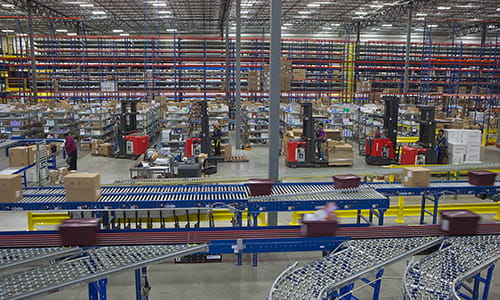
Complete Intralogistics Solutions We are committed to providing an unmatched portfolio of intralogistics solutions that work together to complete virtually any task within your facility. With comprehensive offerings that include material handling equipment, connected technologies, and automated systems, we have the solutions to your problems. Plus, we manage every aspect of the integration process to further enhance performance and productivity throughout your operation.
Learn more about intralogistics solutions, power management, and improving operational performance.
Warehouse optimization services analyze how materials, people, and equipment move through a facility to identify waste, inefficiencies, and bottlenecks. Malin evaluates labor utilization, operator productivity, traffic patterns, and space utilization to build a data-driven path toward higher throughput and lower operating costs before capital investments are made.
Intralogistics refers to the processes, technologies, and equipment used to manage material movement within a facility. An intralogistics solution can address the material handling equipment operators use each day, connected technologies that collect real-time performance data, and automated systems that reduce labor dependency and increase throughput.
Lean management principles such as standardized work, workplace organization, visual management, and KPI tracking help operations identify where valuable hours are lost to unnecessary travel, waiting, or inefficient processes. The result is a leaner operation that can accomplish more with the same or fewer resources while reducing per-unit operating costs.
Warehouse optimization improves how people and processes function within the existing operation. Warehouse automation adds technology that can reduce labor dependency and increase speed.
Malin's approach is to optimize before automating. Automating an inefficient process may only cause that process to run faster while increasing the cost of the underlying inefficiency.
Raymond Lean Management, built on the Toyota Production System, applies waste elimination, standardized work, and continuous improvement to warehouse and distribution environments. This approach can create more usable space, improve workforce productivity, and establish a stronger foundation for future technology investments.
Warehouse optimization is especially valuable when an operation is experiencing declining productivity, rising labor costs, space constraints, or inconsistent fulfillment performance. It is also an important first step before expanding a facility, implementing automation, or upgrading material handling equipment.
Any facility that depends on efficient material movement can benefit from intralogistics optimization, but the impact is often greatest in high-SKU, high-volume environments. Distribution centers, third-party logistics providers, e-commerce fulfillment operations, food processing facilities, and manufacturing plants may see significant gains, especially when facing labor shortages, space constraints, or rising operating costs.
Frequently Asked Questions About Energy Management
What are warehouse optimization services?
What does intralogistics solutions mean?
How can warehouse optimization improve productivity and reduce labor costs?
What is the difference between warehouse optimization and warehouse automation?
How does lean management apply to warehouse operations?
When should a business invest in warehouse optimization services?
What types of facilities benefit most from intralogistics optimization?